warif

warif.ai

We don't start with AI. We start with the data you already hold the raw asset

Most AI companies have a model and go looking for data to feed it. We work the other way around: we start with the knowledge already held in your organisation's documents, archives, content and data, and re-engineer its journey until it becomes a living asset.

Ottoman decree · mühimme register · p. 127

Original · document image

A page from an Ottoman decree in dıvanı script, the original document before processing

Transcribed text · p. 127

... اناس يتاقدر ديو خبر ويروب وبونلردن ماعدا مالبورجى جماعتندن شاه ويردى وقره مصطفى وحاجى حسن

وسليمان واسمعيل وقره عيسى وبيرام ورستم و - - محرم وصاوجى نام حرامى غربتلروك اركنه كوپروسنده قورجى

نام قريه ده امير محمد نام كمسنه وقرنداشى وكويكى سى بوركجى نام كمسنه لر يتاقلرى اولوب سابقا حراميلق ده قتل اولنان

خواجه پيرعلى نك وقره بلبل نام اوغلى اله كلدكده مزبور قره  بلبل وخواجه پيرعلى نك زوجه سى مذكور خوجه پيرعلى مزبور

امير محمدده لعل قاشلو بر التون يوزك وبر مور اسقرلاد چوقه فراجه وبرات وقرنداشنده بر يوند وبر خيلى طاش

ودرت التون وكويكى سى بوركچى ده بر يوند وبر بيوك تبسى وبر طنجره امانت قومش ايدى مزبور قتل اولنوب

بزغيبت اتدوك ذكر اولنان اسبابلر مذكورلرده قالدى ديو خبر ويرمكين مزبورلر اله كلمك ايچون أورن چاوش

ارسال اولنمش در بيوردوم كه / واردوقده مزبور چاوشم مذكورلرى هر قنقكزك تحت قضاسنده بولوب اله كتورمك

استرسه اهمال اتميوب كركى كبى معاونت و مظاهرت ايليوب اله كتوروب حبس ايدوب مزبور چاوشم ايله دركاه معلامه

كوندره سن اما شويلكه مزبورلر اله كتورلملو اولدوقده اطاعت امر ايتميوب عناد ومخالفت ايدوب وياخود حرب وجنكه

مباشرت ايدوب عصيان صورتنى كوسترورلرسه ذكر اولنان حراميلردن ومعين اولوب معاونت ايدنلردن اول محلده

قتل اولنان قاتل دن صورلميه وبعض يكيچرى وسپاهى طايفه سندن اهل فسادى اله ويرميوب عناد ايدرلرمش انك كبى ذكر

اولنان اهل فساددن اكر زعما وارباب تيمار و يكيچرى - - يانلرنده اولا طلب ايلدوكده ويرميوب

عناد ايدرلرسه اسملريله مفصل ومشروح يازوب عرض ايده سز كه حقلرندن كلنوب سايرلرينه موجب عبرت اولا

ومزبور چاوشم آكه كوره اهل فساددن هركيمى اله كتورمك استرسه سزكه قاضيلرسز سيزوك معرفتيكز ايله كوروب

بوبهانه ايله مذكورلردن غيرى كندو حالنده اولنلره دخل اولنميوب وياخود كمسنه دن اكل و جلب اولنمقدن حذر ايده سز
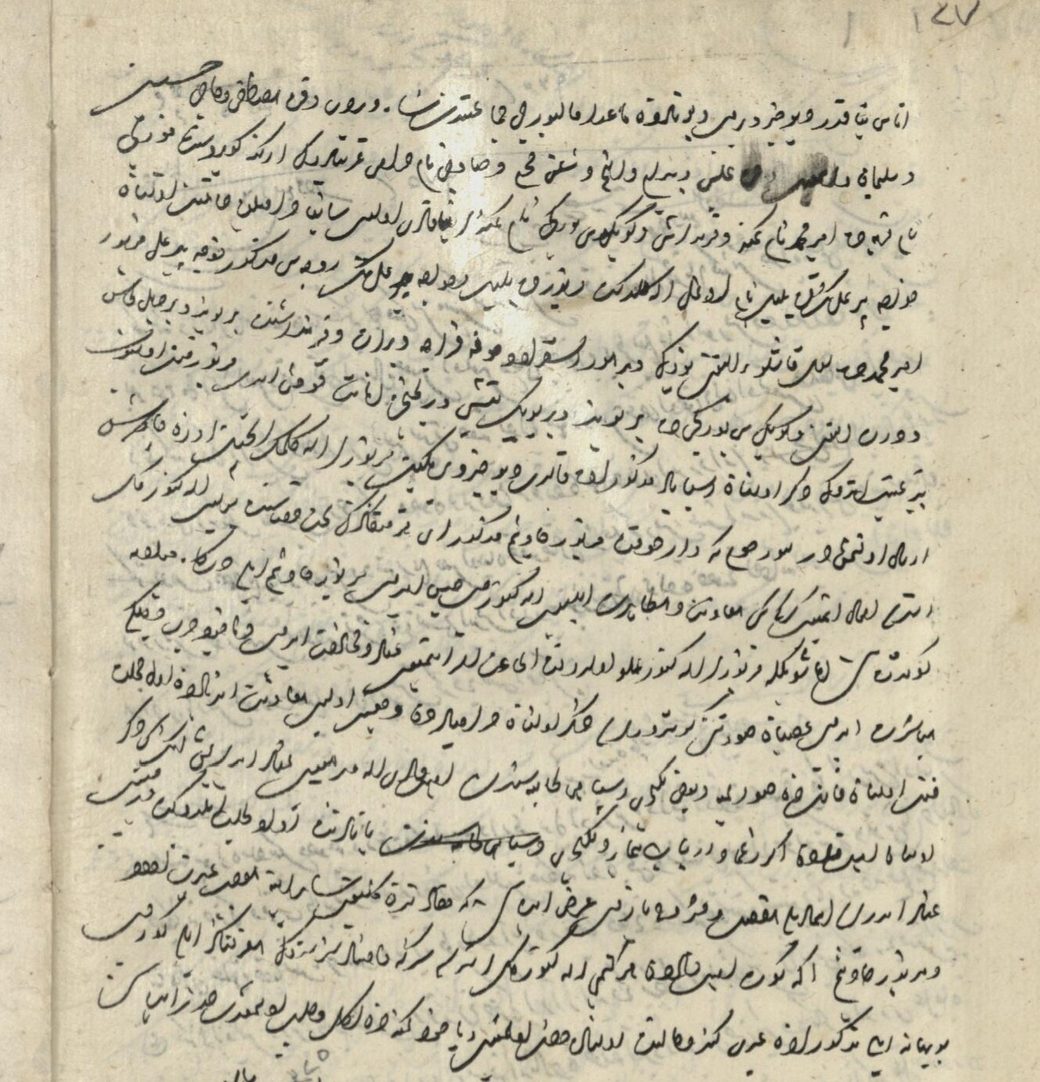
The original is an image no machine can read. The result is text that can be selected, searched and connected. Between them sits a full pipeline: handwriting recognition, human review, metadata extraction, and a link from every line back to its place in the original.

The problem

Your problem isn't a lack of knowledge. It's that your knowledge doesn't work.

Your knowledge already exists, but it is trapped in its form: text inside an image that cannot be read, a document that cannot be searched, a subject scattered across files with nothing connecting them.

The problem is structural, not informational. Your knowledge does not accumulate, connect, or get reused.

And AI on top of disorder does not create knowledge. Before the model can work, the knowledge itself has to work.

How we work

The knowledge lifecycle

From a raw asset, to knowledge that works. Select any stage to see its inputs and outputs.

Not every project follows every stage in the same way. The lifecycle is built around the knowledge, the problem, and the required outcome.

Applications

One method, applied to different kinds of knowledge.

We don't build a platform and then look for a problem. Every application started from a real knowledge asset.

01

Knowledge Architecture for Historical Documents

The asset: Ottoman documents and manuscripts preserved as images.

The transformation: From an image that cannot be read, to text that can be searched, translated and connected.

In practice: The Waqf Assets Knowledge Base, the first institutional application, on Ottoman waqf documents relating to Jerusalem. More than 12,000 pages.

Read the full case study →

Classification → Ground truth → Model training → Generated text → Guided review → Entities and search
02

Knowledge Architecture for Content

The asset: An archive of published content: articles, fatwas, studies and other materials.

The transformation: From content that is read once, to knowledge units that can be connected and recomposed.

In practice: IslamOnline, an archive spanning more than twenty years.

Case study in preparation

Content → Knowledge units → Tagging → Connection → Thematic files
03

Knowledge Architecture for Industrial Products

The asset: Product images, catalogues, specifications and scattered data.

The transformation: From fragmented assets, to an updatable multilingual commercial catalogue.

In practice: Smart catalogues for manufacturers, a model designed for small and medium-sized manufacturers.

Case study in preparation

Manufacturer assets → Organisation → Review → Translation → Updatable asset
04

Knowledge Architecture for Translation

The asset: Texts, terminology and references in large-scale translation projects.

The transformation: From a translation that ends with the file, to translation knowledge that accumulates and is reused.

In practice: Multi-volume translation projects for specialised books and reference works.

Case study in preparation

Text → Terminology in context → Translation → Review → Reusable knowledge memory

From method to operation

Technology comes in where the knowledge needs it.

Every kind of knowledge has a different journey, so every project needs different tools. We don't impose a single technology stack; we select what the journey requires, when it requires it.

WarifEngine

The layer that operationalises the journey, bringing together the capabilities it needs, from text recognition and translation to connection and search.

The source is preserved

Sources, structure and review history are kept across the whole pipeline. Knowledge stays connected to its origin from beginning to end.

Capabilities, not a product

Different capabilities used as needed, rather than one bundle imposed on every case.

What accumulates

After delivery, what do you still have?

In conventional projects the work ends when the deliverable is handed over and the file is closed. Everything built along the way, the terminology, the relationships, the decisions, disappears with it. Here, your project ends with two assets, not one.

The deliverable remains

The translation, the catalogue, the thematic file, the searchable archive. Ready and in use.

And what sits behind it remains too

Transcribed and reviewed texts, terminology memory, knowledge units and their relationships, extracted metadata, review rules and documented decisions. It does not disappear when the task ends; it stays yours.

So your capability grows. Your next project does not start from zero. It starts from an asset the current project builds for you while completing its immediate task.

Governance

Your data and your knowledge stay yours.

Ownership

Your data and the knowledge accumulated from it belong to your organisation. It is not used beyond the purpose of your project, not shared with a third party, and not used to train any model, except as your organisation approves.

Sovereignty first

The operating environment and data access are defined by the requirements of the project and the institution, including the option of hosting inside the country.

Human review where it matters

Sensitive outputs are not approved automatically. They go through review before becoming a source anyone relies on.

Trust is not a promise. It is built into the architecture.

About

One team, from knowledge to operation.

warif.ai is a team specialised in systems development, data engineering and artificial intelligence, working from the real assets and problems of knowledge institutions rather than from a finished product looking for an application.

Business model design

Defining what the knowledge has to do, and the outcome measured at delivery.

Knowledge and data engineering

Building the knowledge model, its relationships and pipeline, extracting metadata, and setting the review rules.

Systems and AI development

Turning all of that into a system that runs, is maintained, and scales.

Project teams expand according to the material: document and manuscript specialists, language reviewers, domain experts and specialist translators.

Start with your knowledge

Do you have knowledge assets that aren't working as they should?

They may sit in an archive, in documents, in content, in books, or in scattered data. We start by understanding what you have, the problem you want to solve, and what those assets need to become capable of doing.