Applications › Historical documents
Application 01
Knowledge Architecture for Historical Documents
From an image no machine can read, to searchable text, connected entities, and a permanent route back to the original.
Original · document image
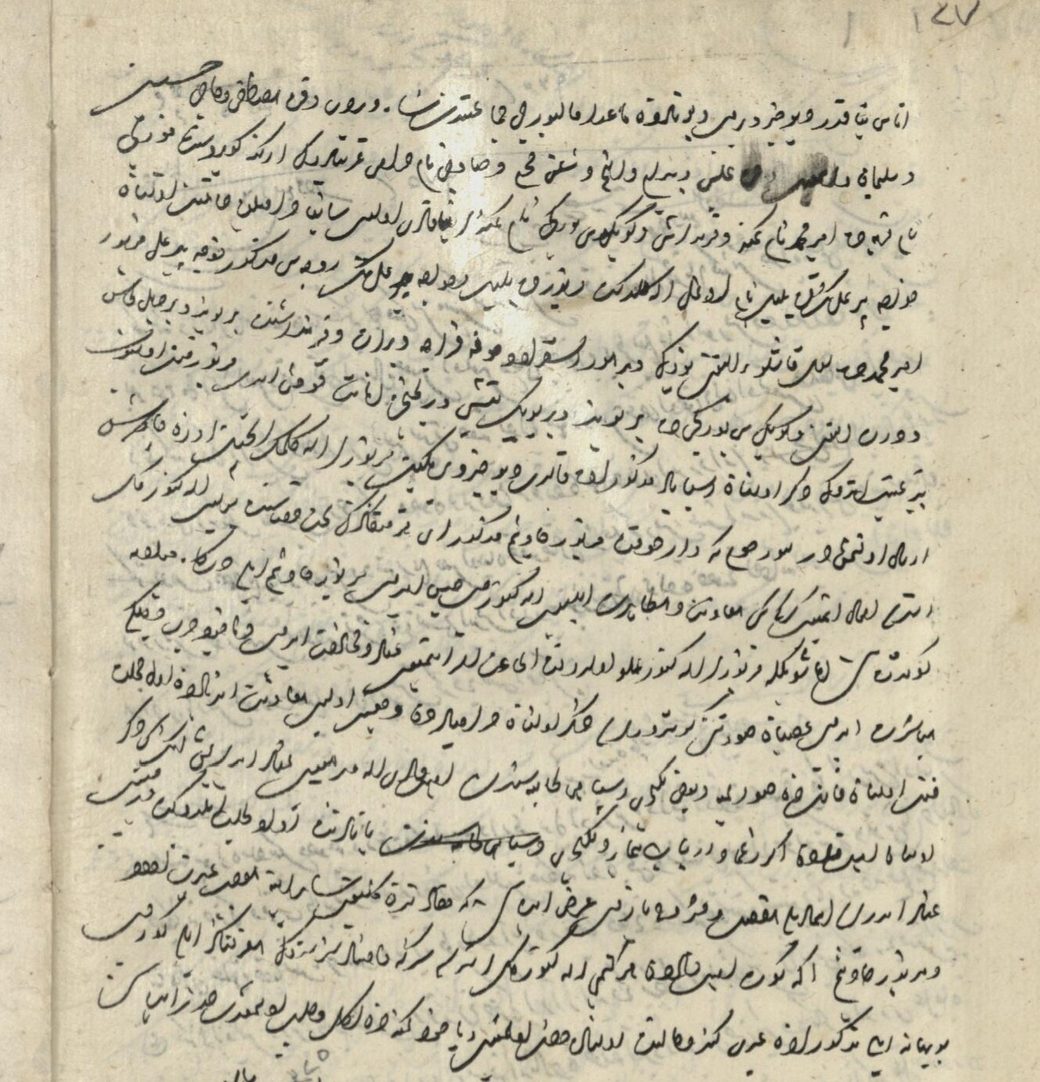
Transcribed text · p. 127
... اناس يتاقدر ديو خبر ويروب وبونلردن ماعدا مالبورجى جماعتندن شاه ويردى وقره مصطفى وحاجى حسن
وسليمان واسمعيل وقره عيسى وبيرام ورستم و - - محرم وصاوجى نام حرامى غربتلروك اركنه كوپروسنده قورجى
نام قريه ده امير محمد نام كمسنه وقرنداشى وكويكى سى بوركجى نام كمسنه لر يتاقلرى اولوب سابقا حراميلق ده قتل اولنان
خواجه پيرعلى نك وقره بلبل نام اوغلى اله كلدكده مزبور قره بلبل وخواجه پيرعلى نك زوجه سى مذكور خوجه پيرعلى مزبور
امير محمدده لعل قاشلو بر التون يوزك وبر مور اسقرلاد چوقه فراجه وبرات وقرنداشنده بر يوند وبر خيلى طاش
ودرت التون وكويكى سى بوركچى ده بر يوند وبر بيوك تبسى وبر طنجره امانت قومش ايدى مزبور قتل اولنوب
بزغيبت اتدوك ذكر اولنان اسبابلر مذكورلرده قالدى ديو خبر ويرمكين مزبورلر اله كلمك ايچون أورن چاوش
ارسال اولنمش در بيوردوم كه / واردوقده مزبور چاوشم مذكورلرى هر قنقكزك تحت قضاسنده بولوب اله كتورمك
استرسه اهمال اتميوب كركى كبى معاونت و مظاهرت ايليوب اله كتوروب حبس ايدوب مزبور چاوشم ايله دركاه معلامه
كوندره سن اما شويلكه مزبورلر اله كتورلملو اولدوقده اطاعت امر ايتميوب عناد ومخالفت ايدوب وياخود حرب وجنكه
مباشرت ايدوب عصيان صورتنى كوسترورلرسه ذكر اولنان حراميلردن ومعين اولوب معاونت ايدنلردن اول محلده
قتل اولنان قاتل دن صورلميه وبعض يكيچرى وسپاهى طايفه سندن اهل فسادى اله ويرميوب عناد ايدرلرمش انك كبى ذكر
اولنان اهل فساددن اكر زعما وارباب تيمار و يكيچرى - - يانلرنده اولا طلب ايلدوكده ويرميوب
عناد ايدرلرسه اسملريله مفصل ومشروح يازوب عرض ايده سز كه حقلرندن كلنوب سايرلرينه موجب عبرت اولا
ومزبور چاوشم آكه كوره اهل فساددن هركيمى اله كتورمك استرسه سزكه قاضيلرسز سيزوك معرفتيكز ايله كوروب
بوبهانه ايله مذكورلردن غيرى كندو حالنده اولنلره دخل اولنميوب وياخود كمسنه دن اكل و جلب اولنمقدن حذر ايده سز
The asset
Preserved material that does not work.
Thousands of pages of Ottoman documents and registers, preserved as images. Written in an interlocking dıvanı hand, in Ottoman Turkish using Arabic letters, undotted in places, on slanting lines that follow no horizontal baseline.
They cannot be searched, cited by position, or connected to one another. Digitisation alone solves nothing: a high-resolution image is still an image. The problem is not preservation. It is form.
What we did
A pipeline built on this material, not a ready-made template.
The order matters: the language expert comes before the model, not after it. No off-the-shelf recognition exists for the Ottoman dıvanı hand, so the model is made from precise human transcription before it can work at all.
Collection and formal classification
The corpus is inventoried and sorted by document type, hand, state of preservation and imaging quality. This classification decides what can be processed automatically and what needs its own route, and prevents training one model on material that is not homogeneous.
Reference transcription by language experts
Specialists in the language and the hand transcribe a sample line by line, exactly as written. This material is the ground truth on which everything after it rests, and its quality is the ceiling on the quality of the whole system.
Training models specialised in the hand
Recognition models are trained on that ground truth until they specialise in this particular hand, not modern print and not handwriting in general. Accuracy is then measured on documents the model never saw in training.
Generating text for new documents
The trained model is applied to the rest of the corpus, generating the text of everything that was never transcribed by hand. This is where the value appears: tens of thousands of pages for the cost of transcribing a sample of them.
Flagging to guide human review
The system marks passages where its confidence drops and locates them on the image itself, so the reviewer goes straight to them instead of reading everything. Review becomes targeted rather than exhaustive.
Metadata extraction
Document type, date, position in the register, language, and reading confidence.
Entity extraction
People, places, dates, items and terms, each bound to where it appears in the original image.
Search and retrieval
Search across text, metadata and entities together, with a permanent route back to the image.
These are not steps taken once. Every batch a specialist reviews becomes new ground truth that improves the model for the batch after it, so flagged passages and review effort both fall as the project advances. That is what accumulation means in this application.
The proof
One record, extracted from the page above.
This is what a single page becomes after the full pipeline. Every value is bound to its position in the original image, so it can always be verified. Names appear in transliteration alongside the original script.
What accumulates
The project ended with two assets, not one.
The deliverable
A searchable, citable archive in which every result leads back to its original image.
And what sits behind it
Transcribed and reviewed ground truth, models trained on this particular hand, reading rules, terminology memory, connected entities, and documented review decisions. The next batch of documents does not start from zero. It starts from a model that already knows its hand.
In practice
The Waqf Assets Knowledge Base, the first institutional application, on Ottoman waqf documents relating to Jerusalem. More than 12,000 pages. The same capability applies to any historical document; waqf is one case of it.